Make, Notion
Inbox Classifier
Built for a founder to cut through email clutter and focus on what matters first.

A smarter inbox that knows what deserves your attention
This agent reads incoming emails, identifies intent and urgency, and automatically prioritises what requires immediate action. Important messages like deals and customer requests are surfaced first, while everything else is quietly organised in the background.
Results at a glance
70% faster response time to important emails
1.5 hours from idea to pilot
1 unified view of all priorities in Notion
The problem
The founder’s inbox was overflowing with customer messages, partnership requests, updates, and spam. Important opportunities were often buried under noise, leading to delayed responses and missed leads.
The solution
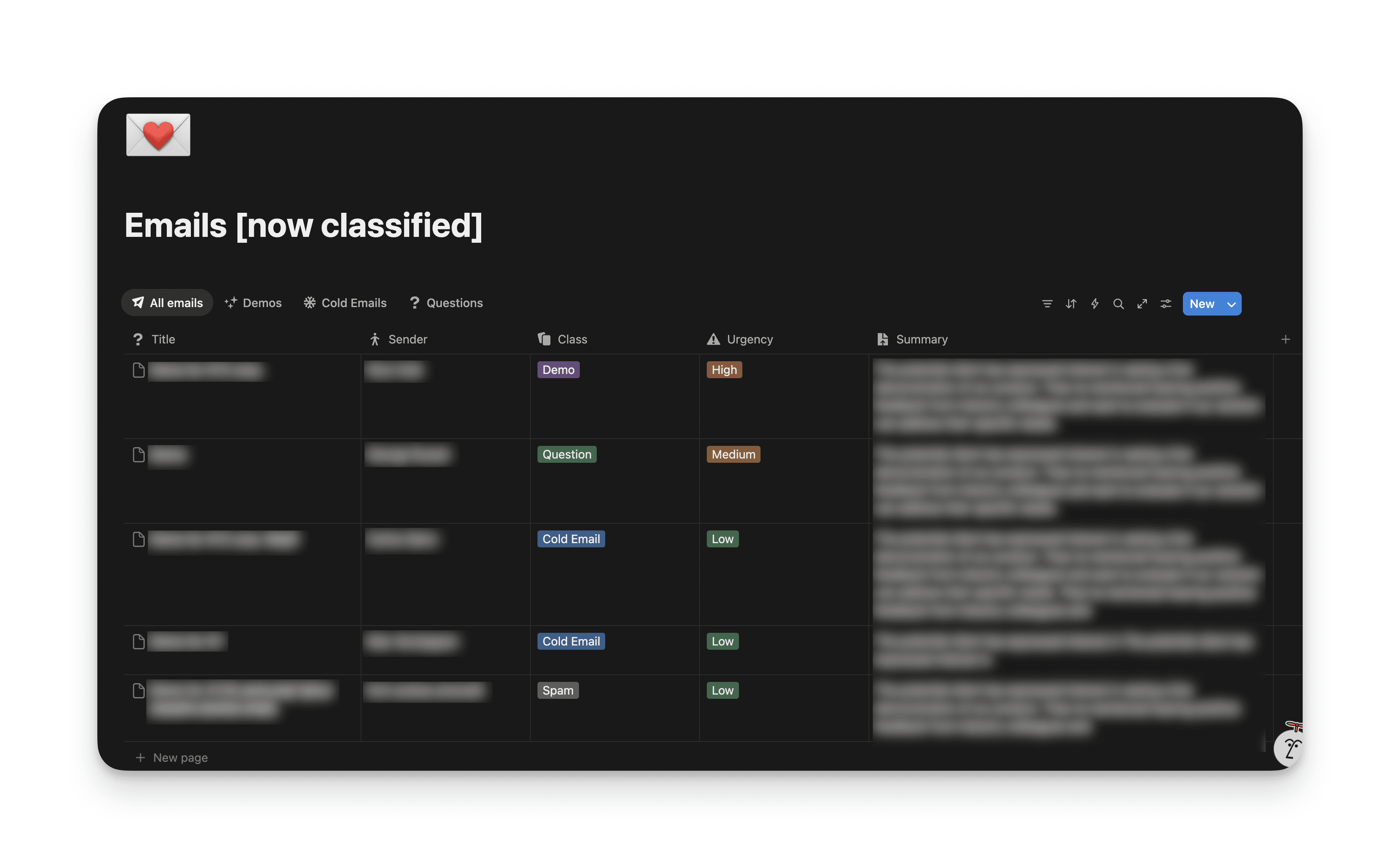
We built an agent that classifies every incoming email based on intent and urgency. It understands the company’s context, tags emails related to deals or customer conversations as high priority, and pushes them to a shared Notion dashboard for review. Lower-priority emails are stored for later, allowing the user to focus only on what truly matters.
How it works
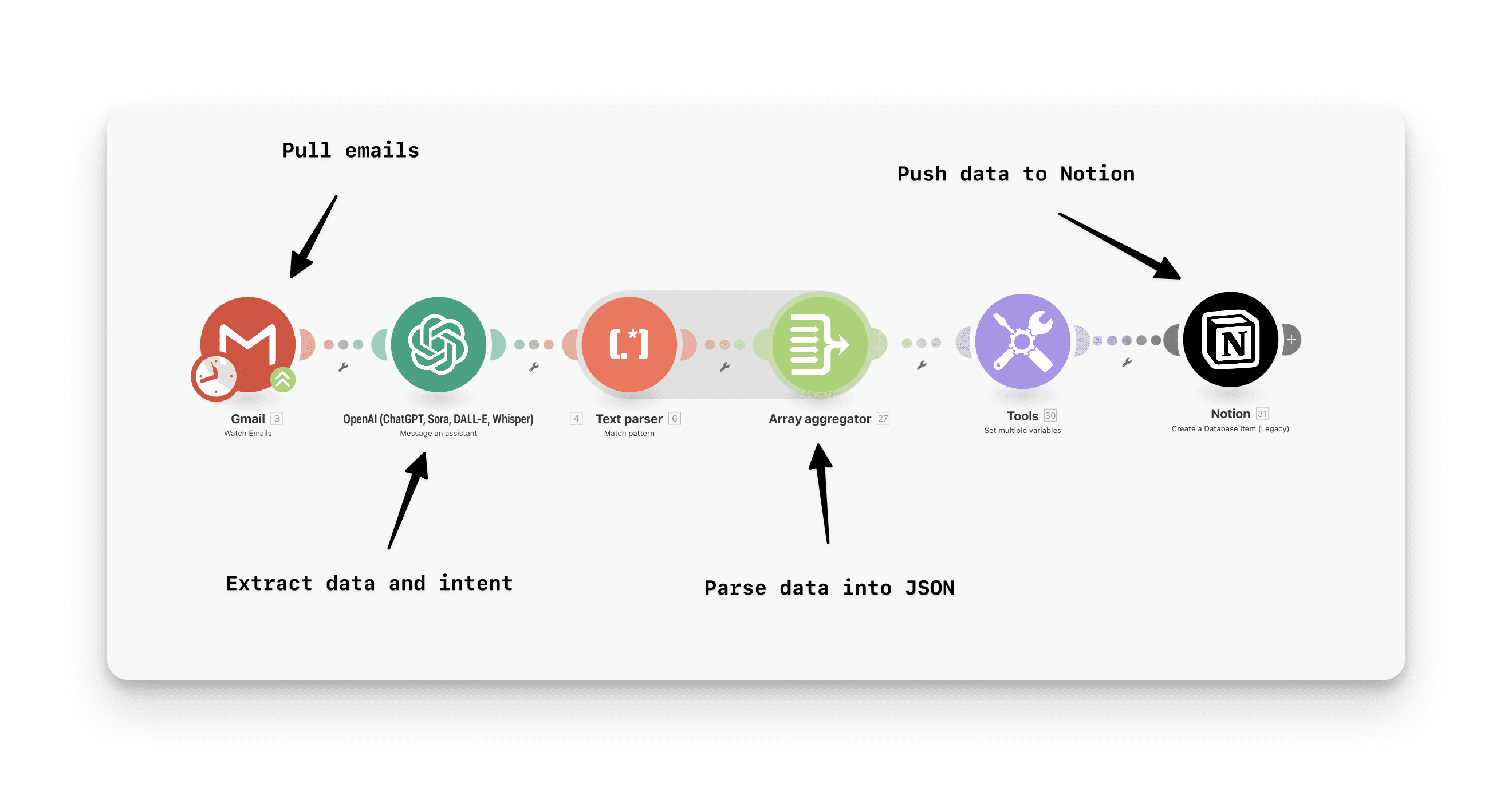
Input: Gmail inbox connected through Make.
Analysis: GPT-5 Mini reads each email’s subject and body, then determines intent and urgency.
Logic: Priority is based on deal relevance and customer relationships.
Database: Classified emails are automatically logged in Notion with category and timestamp.
Review: The user checks the Notion dashboard for all high-priority messages in one place.
Impact
70% faster response to time-sensitive emails
Fewer missed leads and delayed follow-ups
Inbox decluttered into a clear, actionable workflow
Simple automation setup that scales without extra tools
Build overview
Duration: 1.5 hours (idea to working pilot)
Stack: Make, GPT-5 Mini, Notion API
Client: Founder
Challenge: Aggregating data efficiently without using JSON output in the OpenAI node
In summary
The Inbox Classifier transformed an overwhelming inbox into a structured decision layer. By combining reasoning with lightweight automation, it gave a founder back focus and control, improving response speed to important messages by seventy percent without adding any new complexity.
Next work

